Archive for the ‘ Reads ’ Category

On Saturday evening, I had the privilege of being co-MC at Richard Branson’s Book Launch in Johannesburg – South Africa. As you expect with Sir Richard Branson, there were quite a lot of highlights at the event and here are some of the top ones for me. You also stand a chance to hang out with Richard Branson at his private game reserve in 2012.

The value of ideas

We had an onstage Q & A where I asked him – What is the value of ideas?

Sir Richard Branson: “Ideas by themselves have very little value, how they are executed determines how far you will go. A lot of people will tell you why it won’t work, focus on why it will.”

As a global entrepreneur, who is also passionate about entrepreneurship, he is constantly approached with many business ideas, some of which, are more innovative than others. It was eye-opening, for me, that even at his level the principles haven’t changed. That he still grapples with resistance and continues to question the status-quo to make a difference.

Screw Business As Usual is a book that I find questions how business views both, business growth and community development. In this book Richard Branson approaches the idea of developing communities, as everyone’s concern and in that sense challenges businesses both large and small.

He cites cases from how Danone and  Professor Muhammad Yunus of Grameen Bank pioneered a new way to provide nutritious food to communities, while making profits that grow both the community and the business. The book also makes mention of how a lot of startups changed how business is viewed and blazed a trail for how we can continue transform business models.

Get the latest updates on Twitter by following this hashtag: #SBAU

You get to write the next book

I have come to know Richard Branson as an entrepreneur who re-invents the rules, and he does things differently in Screw Business As Usual. He is already working on his next book, but this time you write the story.

Go to Screw Business As Usual here and share how you are screwing business from how it’s traditionally been done, and your story could be part of the next book. Richard Branson and the team are coming to South Africa in 2012, where people with the best ideas get to join them in the trip to SA and hang out at Richard Branson’s private game reserve.

Download the first chapter here. Upload your written idea or a video to stand a chance to win.

Will you be part of it?

In November, I made an announcement about WordStart finally taking off. If you’d like to know more, start here.

For now, we have a blog tour for Gareth Cliff’s new book and tons of give-aways. The tour will stop at different blogs this week and next week till 27 November. WordStart is giving away books on Facebook and Twitter. Follow WordStart here: @WordStarters for up to the minute updates.

If you would like to win yourself a copy of the book, send 3 Tweets telling us why you want one and include #CliffOnEverything. The bloggers will help you by flipping through the pages and writing their thoughts on the book.

Check these blogs for reviews and prizes this week:

  1. Zahira Kharsany at 9:00am, on Tuesday 18 October 2011
  2. Khadija Patel at 15:00pm, on Tuesday 18 October 2011
  3. Nonkululeko Godana at 12:00pm, on Wednesday 19 October 2011
  4. Ideate at 15:00pm,  on Wednesday 19 October 2011
  5. Arthur Van Wyk at 12:00pm, on Thursday 20 October 2011
  6. SA Rocks at 10:00am, on Friday 21 October 2011
  7. Briget Ferguson at 12:00pm, on Friday 21 October 2011
  8. Sheena Gates at 14:00, on Friday 21 October 2011

Follow #CliffOnEverything on Twitter for awesome prizes.

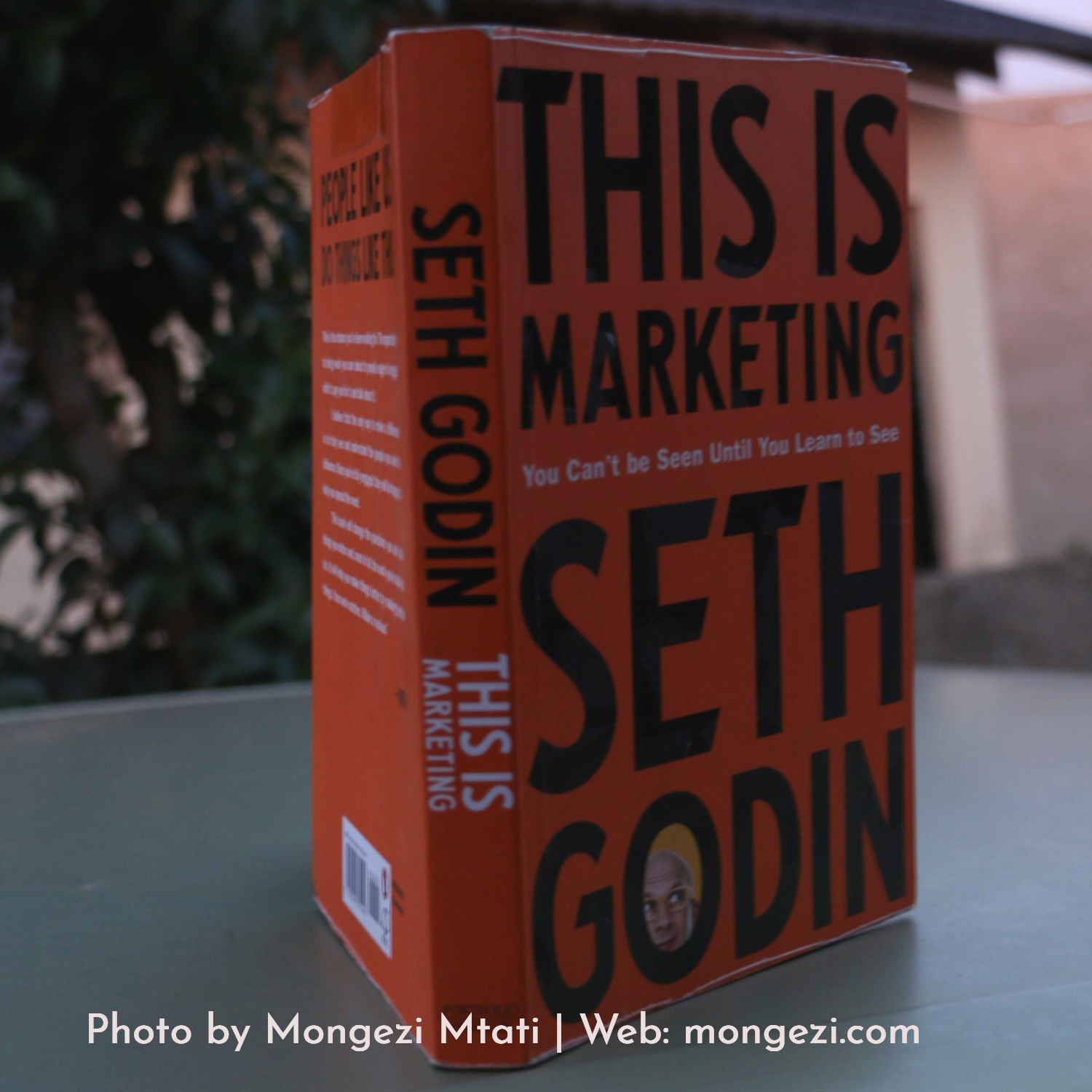
Seth Godin made an announcement last year that he wouldn’t publish another book through traditional means. Never again! There was much debate online, questions were asked and many speculated that he still will.

All speculation was cast aside when he launched The Domino Project, with Poke The Box being his first release. So, I went over to Amazon, ordered a copy, waited 3 weeks. . . . . . And voila! The 84-page little book, with a running man arrived.

Seth Godin cuts through all assumptions and challenges you right from the start. Much like he did in Linchpin, he tempts you out of comfort, he calls you out, he asks you to take a stand. No contents pages, no forewords, no introductions, he just gets right into it.

In all of four sittings, each less than an hour – with coffee breaks – I was done.

“The job isn’t to catch up to the status quo; 
 the job is to invent the status quo.” 

When you read those opening lines, you know it’s you. Or not. If it isn’t, don’t bother reading further. This post is not for you. Check back next time.

Poke The Box – is a book about:

  • Doing!
  • Doing what you love
  • Questioning the status quo
  • Starting things
  • Starting everyday
  • Failing!
  • Failing often
  • Making a connection
  • Finishing what you started
  • Shipping
  • Shipping often
  • Repeat!

In 84 pages, Poke The Box takes you through a journey of changing things. A journey of getting to ‘Yes!’. Of facing fear. Of living without the fear of starting. You realize when you’ve done enough and you need to take your ideas out to market.

Now go!

Go start!

Start new things. Start every day. Ship your ideas. Repeat!

After reading most books, I would review them. That is, comfortably write about what I got, yet The Art Of The Start was different. It goes in depth about starting an organization (whether for profit not), and running it successfully. If you are running a successful organization, then it’s a book you wish you read before starting – and a hardback you want to own.

Guy Kawasaki had me gripped in his introduction, where he wrote:

“When telescopes work, everyone is an astronomer, and the world is full of stars. When they don’t, everyone whips out their microscopes, and the world is full of flaws.”

Granted! We all start organizations to cause – some much needed – change in the world. More important than change, if you take away one thing from this post – it should be go out there and make meaning. Guy warns entrepreneurs against “being solutions looking for problems”, which most experts won’t tell you.

Carve a niche

An entrepreneurial organization that serves, and targets everyone, is a solution looking for a problem. A well defined business model quickly resolves this issue and helps you cut your losses. Here are Guy Kawasaki’s guides to defining a business model:

  • Who has your money in their pockets?
  • How are you going to get it into your pockets?

Tips to develop your business model

  1. Be specific – Know who your customer is, serve them and grow outwardly.
  2. Keep it simple – Narrow your business model down to ten words.
  3. Copy somebody – Many people have innovated business models, you can copy what exists and innovate in technology, markets or customers.

Have you ever had a great idea, one you knew that was sure to be the proverbial cash cow, but you never acted on it?

Well….ideas by themselves are worthless and Guy Kawasaki advises that you create a prototype to end the uncertainty and get it to market immediately. Most of us want to perfect our offer, as though that is the final version of the product, when our customers will need us perfect and change it.

The Art Of Bootstrapping

Having read (and lived by) Seth Godin’s, Bootstrapper’s Bible and being eager to reach Guy Kawasaki’s chapter about it. It seemed to take me too long.

I admit, the possibility of raising capital, building an organization that quickly gets acquired by a conglomerate and “living happily after”, crossed my mind. Sadly, happily afters are great before bedtime and 8pm romance thrillers.

From being an Evangelist at Apple in the 1980s, to starting Garage Venturesa venture capital firm. Guy Kawasaki himself emphasizes how the odds of raising capital are slim to non-existent.

In the beginning stages of this chapter he states that “entrepreneurs can bootstrap any business model”, because bootstrapping is managing for cash flow. And when done correctly, it will be a stage in the life of your business.

Here are some excerpts to note about bootstrapping:

  • Build A Bottom Up Forecast – Know the minimum achievable goal, then build your cash and sales forecast from there.
  • Ship, Then Test – Get your product to market immediately, fix problems that may arise, ship again and alter product till you’ve perfected it.
  • Forget The Proven Team – Forget about hiring well-known industry veterans. Build a case for your team.
  • Start As A Service Business – You can making cash immediately and pay for further research and development.
  • Focus On Function, Not Form – When selecting service providers, pick them based on your needs – not their size.
  • Pick Your Battles – Make money from you magic, not things anyone else can do.
  • Go Direct – The more middlemen there are between you (the seller) and your customer, the longer it takes to know what to fix.
  • Position Against The Leader – Your competition has done you a huge favour by establishing themselves ahead of you. Use known equivalents to describe what you do.
  • Take The Red Pill – As in The Matrix, rid yourself of fantasy and face reality.
  • Get A Morpheus – As in The Matrix again, this is the person who sees to it that you achieve your objectives and is realistic.
  • Understaff and Outsource – Run with a lean team, it’s better than laying off people you didn’t need in the first place. Outsource everything else.
  • Build A Board – Not only for funded businesses, it helps with evangelism and maintaining innovativeness.
  • Sweat The Big Stuff – Looking big and fancy are less significant than developing your product, selling and getting paid. Focus on what matters

As you can tell, bootstrapping is one of the lessons I had to learn again. It keeps you on course and definitely differentiates you from everyone else. That, like romance thrillers, leads to a happily after.

This chapter, which also quotes Seth Godin, drives home the idea of making meaning and strengthening your business model.

These, as said earlier, are just some of the highlights and lessons I had to learn. You’ll be seeing a lot of quotes from The Art Of The Start, going forward. It spoke to areas in my startup that need perfecting and improving and testing. Other things that also ring true from the book are the Art Of Pitching and the Art Of Selling.

What is the most significant lesson you’ve learnt in business, lately? Care to share?

Let us know what you’ve read as well. If you’d like to share it, you could write a guest review.

Business plans are never a true reflection of what goes on in a startup. Yet banks, funders and potential investors still insist on them. My mentor told me something very interesting recently, which also transformed the way I view business since that chat. His words were “don’t plan too much, take your product to market and let clients determine how you craft it to meet their needs”.

That message was also conveyed in Allon Raiz’s new book – Lose The Business Plan “What they don’t teach you about being an entrepreneur. Something I got prior to launch and Allon Raiz singed it. If you have been here before, you may have read a wish list of people I wanted to meet and talk to, Allon is one of those people.

The book begins with Allon citing a meeting he had with his mentor, who believed in him and continually invested in ideas that sometimes failed and others succeeded. While starting businesses and growing them, Allon Raiz realized his passion was in building businesses rather than running them. That was when he discovered the incubator business model, which he now runs as Raizcorp alongside a team of committed people.

Desire

In the first few chapters he got me hooked, not only with the bold title, but because of some of the things he mentions in the book with desire being one of them.

“Desire is almost the inoculation against the downside. It is desire that gives you the ability to carry on when sales are down and you’re not closing any deals.” – Page 28

Business Plans, as almost a prerequisite, are not expected to portray anything that resembles change and wanting to transform how things are done in business. Banks and funders are about the numbers, low risk and a graph that starts with funding and takes an upward curve. Realistically, startups have challenges and continually alter their offer to suit the market. And banks, though knowing this, expect small businesses to follow a similar path.

Most funding requests are measured as being viable by people who, themselves, are not entrepreneurs. Then comes the dreaded meeting with your would-be funder, where you put on your best behavior and leave the dream, the desire to change things back home.

I had sex last night

Keep your mind out of the gutter, at least till you’ve commented – what you do thereafter is up to you.

Sex, being a universal activity across different cultures is a test that Allon uses for research among groups of entrepreneurs he interacts with. In this test he requests the participants to write words they associate with sex.

His findings reveal “up to 10% of the participants in pairs have no words in common and the average correlation is less than 14%”. This he uses as proof that something as unique as your business, in comparison to a universal activity, requires you to get the masses excited about.

He also found over 500 definitions of the word ‘entrepreneur’, with the only link being “They see an opportunity, take a risk, and in doing so create value”.

It is then, for the purpose of this post, safe to say that no 2 people will have a similar path in their businesses and business plans overlook that.

3 Types Of Entrepreneurs

You may have found yourself in countless debates about who is an entrepreneur and who isn’t. The committed man down the road from you, who has been running the same supermarket for ages, is seen as an entrepreneur. You may not agree, but everyone is adamant he is. Allon settles that argument with these 3 different kinds of entrepreneurs.

And the types are . . . . .

  • The Subsistence Entrepreneur : Generally a one man band that has no real value, as it relies completely on the entrepreneur. It also does not make consistent profits.
  • The Lifestyle Entrepreneur : Similar to the subsistence entrepreneur’s business, this one cannot be sold without the entrepreneur. Inversely, it makes a consistent profit that is sufficient in sustaining the entrepreneur’s lifestyle.
  • The Growth Entrepreneur : This entrepreneur’s entity has value, and with time depends less on the entrepreneur. It also makes profits without the entrepreneur.

The Bottom Line

Allon Raiz wrote this book to get a point across and he manages to grip you quickly. Within the first few pages, you know if it’s something worth reading for you or not. He makes some valid points and in all of two sittings, I had decided to read the 154 pages again. Because it has some invaluable information, I would give it away except mine is a signed copy.

This book obliterates a lot of the misconceptions we tend to have about entrepreneurs and what makes them.

Which type of entrepreneur are you?

===========

Allon Raiz is the founder and CEO of Raizcorp, the only privately held, unfunded, profitable business incubator on the African continent, supporting in excess of 200 businesses.

Make contact with Allon on his website here, take a peak at Raizcorp and follow them on Twitter.

========

Photo by: Chris Guillebeau

Do you want to change the world, but struggle to differentiate yourself enough?

Organizing a community lets people know whether they belong there or not. Whether it’s for them or not. With the right people, you are able to focus instead of wasting your time and energy on everybody else – who is not meant to be part of that community.

Author, world traveler and change agent – Chris Guillebeau is our first guest this month. He took a moment from planning his book tour – to let me know what inspires him and how he built his global community.

Q & A with Chris Guillebeau

Q : What is the Art Of Non-Conformity?

Chris : AONC is a blog, a book, a business, and a community—mostly the latter. I started the project in 2008 as a way to spread unconventional ideas and help people find a way to achieve big goals.

Q : While developing products and travelling the world, how do you maintain focus on building your business and “making a living”?

Chris : I don’t really focus on “making a living.” I do focus on work, but most of my work is free for everyone. I use a 90/10 model where 90% of my writing and events are free and 10% are paid.

Q : How would you define your product?

Chris : Let’s look at the overall goal: to help people live unconventional, remarkable lives. How that works varies. I have the blog and other hubs where I connect with readers. I have the Unconventional Guides business that consists of things like the Empire Building Kit and the Frequent Flyer Master guide.

Overall, I hope that all of these help people in a different ways, but with the same goal of creating individual freedom and inspiring action.

Q : Why did you decide on creating your own niche community?

Chris : I felt like I had helped a lot of people on a one-on-one basis over the years, but I had no broader platform. I turned 30 years old and in the process realized that I wanted to be a writer. So I started the site and went from there.

Q: Most entrepreneurs starting out want to satisfy everyone. We want to sell everything to everyone. How did you identify the people you wanted to organize into a community?

Chris : Correct, and that’s a big mistake. In my case I learned to target people on a psychographic basis as opposed to a demographic basis. I have readers of all ages, all backgrounds, from all over the world. What they have in common is a desire to change the world.

It’s interesting, because in the beginning when I connected with a literary agent and he was pitching my project to traditional publishers, some of them said, “People who want to change the world are not a target market” – which makes sense in a traditional, business-oriented context. But over time I’ve become more and more convinced that “people who want to change the world” is indeed my perfect audience. It’s also an audience that is motivated to take action, which is always good.

Q : What would you attribute as the single most important aspect of creating your community?

Chris : Consistency. A lot of bloggers start out strong and then fade off into the blogging sunset. If you can just keep going and building a strong platform, you end up outlasting people and it gets easier over time.

Q : In your manifesto: A Brief Guide To World Domination – you clearly state I should warn you now that this report is not for everyone. I have also realized that from your blog and the rest of your products. Doesn’t that separation of your audience from everyone else limit how much you can make and who you can reach?

Chris : No, for reasons you alluded to earlier—it’s always a mistake to target everyone. Better to be clear what you’re about and who your work is for. This also makes it much easier to build trust and authority among the group with which you choose to identify.

Q : Most of your content is free, while traditional business principle tells us to “sell” “sell” sell”. Where do you make your money?

Chris : I still make money, but the greater goal is influence. The money comes from UnconventionalGuides.com and my book publisher—though much more of it comes from my own projects than the publishing arrangement. (I’m still a fan of writing books, but it’s true that there’s not much money in it.)

Q : You have become quite – in fact very influential online and off. What does it take to build such influence and become this outstanding?

Chris : Well, I’m not sure I’m outstanding. When I think of people who are outstanding, I don’t think of bloggers—I think of people who have truly sacrificed, like the aid workers I used to work with before I embraced the soft life as a world-traveling blogger.

But in terms of influence, it takes working towards something day-in, day-out for an extended period of time, often without much reward or attention in the beginning. I also decided I wanted to create real relationships with readers as much as possible. I answer all the emails and don’t outsource anything. I meet with readers wherever I go. I do blog interviews for sites that have 10 readers and podcast interviews for shows that are still getting off the ground.

Over time, I think those things have a real impact.

Q : Most entrepreneurs want to be different, but fear the unknown – the unexplored. How does one overcome that hurdle of distinguishing themselves and carving a niche?

Chris : Yes, I agree that fear is a very real obstacle. I think the key to overcoming it is:

a. acknowledging your fears, without trying to be “fearless” or pretend that fear doesn’t exist, and

b. not allow your fears to make your decisions for you.

Instead, ask yourself – what would I do if I wasn’t afraid, or if there were no limits? Then find a way to get closer to that, even if it’s a series of small steps at first.

Q : You are doing the Unconventional Book Tour soon, what inspired it?

Chris : These days a lot of people are saying that books are dead and book tours are ineffective. I like the idea of proving those ideas wrong—my contention is that people have been doing book promotion the wrong way, but that doesn’t mean that books are dead.

And I also like big goals, so when I decided to establish my own tour, I thought… why not make it as epic as possible? So I picked all 50 states instead of just the major cities. Then I added all 10 provinces in Canada, because I didn’t want to leave them out. Then I added an extra city in California, an extra city in Texas, Washington, D.C. – and came up with a 63-city self-funded, collectively-organized book tour. I hope to take it worldwide next year, but one thing at a time. :)

Q : As an entrepreneur and agent of change, what is the one most difficult challenge for you?

Chris: The fear and insecurity we mentioned earlier are continual challenges. I also have a hard time asking for help – I have a lot of people willing to help with things, but I don’t always know what to ask them to do.

—————————–

While Chris is on the go and launching his new book, he also Tweets here and blogs at AONC. I recommend you follow him.

——————————

This episode of NetwebTV was probably the most debated. The concept of Viral Marketing is seemingly dying out in its most organic form. At least for me it seems it is.

The way I thought about it was – someone records a video of some or other mishap and it spreads on YouTube. Then marketers and big corporates caught on to it and invested money, which later transformed that initial perception.

To not only satisfy my own curiosity – but also to find whether viral marketing and spreading ideas can be planned – we had to out and find some black belt ninjas to speak to us.

Change of perceptions and new knowledge:

In this episode I spoke to an entrepreneur who spread the idea of education, furtherance and growth in the lives of young people. Yashivan Govender, is the founder of FristStep.me that was built around the idea of developing oneself. And they have been growing in leaps in bounds – long before the now known hype of Social Media.

You Make Joburg Great connects people who want to be connected

We also went out to Penquin International, the company behind one of the most popular campaigns in Johannesburg if not South Africa. You Make Joburg Great is based on the simple idea that a city should be about how its people are and the change they are part of.

Guy Orsmond, the account executive behind the campaign, shares how they spread this initiative and got the masses so involved people themselves took ownership of the idea.

Seth Godin on the viral spread of ideas

If there is one thing about Seth Godin and how he spreads his thinking widely all over the the globe, it’s how always links a simple idea to his work.

In this episode, he talks about how you can and execute your strategy as an idea. Once you have managed that, then the product related to that simple story spreads among its users.

Take a look at the video below and share your thinking about viral marketing and spreading ideas.

How did you find the video? Let us know who you think we should feature next and what you want hear about.

It seems 2010 brought with it a downpour of work and little distractions that just keep me away from writing. But there will be more reading this winter.

If you have been here before, you would know I had an interview with Seth Godin about his book Linchpin. (If you haven’t – you just might score yourself a free copy. I’m glad you stopped by).

Linchpin is a book about gifts, and art and adding value and being indispensable. If you thought that couldn’t be done where you are right now – in your job or business. This gem blasts that misconception along with the lizard brain that propagates it. Seth describes the ‘lizard brain’ as that part of our minds which holds us back from making real progress. It strikes a balance between being an entrepreneur and a change agent where you currently work.

Lost marbles

By now you are probably thinking I’ve lost my marbles, books that accomplish such balance are watered down and don’t really speak to the one or other person. But it does, in a way that on only Seth Godin can. And I will have you know that my marbles are still intact. Thanks for the concern.

Monthly read

The idea is to share and recommend our latest reads, while giving one book away every month. Yes, you stand a chance to get yourself a copy of Linchpin, because that is what I’m reading at the moment. Leave some ideas in the comments and the best one gets the book. It’s really that easy! We’ll keep expanding on the ideas and probably make it more intricate with your contribution, but that’s not intention.

Terms and conditions don’t apply, but there’s just one small thing

As you might have guessed it, there is one thing that could be a potential challenge. Because this is a self-funded project, I’d like to try keep it as cost effective as possible. So for now, the give-aways will be to our South African readers and we can spread it globally at a later stage.

Why should you get it?

Leave some ideas in the comments and if yours is the best to spread this project to most people, you get the book sent to you.

“Good enough” – will no longer get you through the door when your most remarkable work is what matters.

Seth Godin a marketing guru, international author and well sought after speaker wrote yet another thought-provoking book. The difference now is; we were one of the first shows he spoke to about his latest offering.

Linchpin is a book that questions what your best is and how you as an artist, an agent of change can get it out there without leaving your job. The times of work, get a paycheck, retire or even worse get retrenched are gone. Now the world is looking for you, for your work and we are listening to what you have to say.

In this episode Seth tells us how we can take advantage of change and even better be the cause. I also asked him about the concept of giving things free yet still being able to make a living.

When developing a business model, we often overlook implementing marketing tools to spread our concepts virally. Unleashing the Ideavirus, a book that I think requires a sequel, transformed the view I have of my current business model.

While there many concepts covered in the book, for the purpose of this post, only 3 significant highlights will suffice.

Loosely referencing The Tipping Point by Malcom Gladwell on how some ideas turn into social epidemics and others don’t. Seth takes us through the process of how companies such as Hotmail and Vindigo spread as viruses and the Toyota Prius, while an award winning vehicle, didn’t.

The second mind altering concept, though disputing all known marketing ethic, is focusing on a smaller target audience (called ‘a hive’) instead of setting out for large numbers. This makes sense if you view your client base as a community that can reach friends and recommend your product or service better than adverts and large marketing budgets ever can.

The steps below, a very short summary, are how you develop an Ideavirus.

Step By Step, Ideavirus tactics (summarized from the book)

  • Make it virusworthy – If it’s not worth talking about, no one will talk it.
  • Identify the hive.

You won’t get the full benefit of the ideavirus until you dominate your hive.

  • Expose your idea

Expose it to the right people, get them into the experience as quickly as possible and pay them if necessary. But never charge if possible.

  • Once attention has been volunteered request permission.
  • Amaze your audience.
  • Some viruses don’t forever, embrace the lifecycle of yours.

Any business model that has a viral marketing method built into it has a better chance at longevity, besides why not make it easy for your clients and customers to spread the idea? If there’s one thing I would recommend, it would be read it with an open mind and download the ebook or get the shiny collector’s version here.